Explore the language science powering tomorrow's communication technologies.
Computational Linguistics introduces you to the wonders of natural languages and the analytical methods underlying natural language technologies used worldwide.
During this two-week program, you will learn about how human languages are both the same and different, explore software and technology for processing language and human speech, and apply these tools and knowledge to directly investigate many languages in the world, including ones that are neither well-documented nor well-studied.
Program Notes:
This is a two-week program that takes place during sessions 3 and 4. Residential participants may return home over the weekend or stay on campus for an additional fee.
Applications for this course are reviewed in two rounds. The first review takes place on March 3, 2026 and the second on May 1, 2026.
Applications received on or before March 3 will be included in the first review. Applications submitted between March 4 and May 5, 2026 will be reviewed in the second round.
Participants will be notified of admission decisions within two weeks following the review period in which their application is considered.
Experiential Learning
Working with faculty and graduate students during this course you will:
- Learn analytical, computational, and creative thinking in regard to different aspects of human languages, including morphology, syntax, semantics, phonetics and phonology.
- Study the science behind how humans learn language and the engineering behind modern natural language technologies such as voice assistants and AI chatbots.
- Participate in team projects motivated by research challenges including but not limited to speech recognition, combinatorics, parsing, and language generation.
By the end of the program, you will have sufficient linguistic knowledge, analytical skills, software expertise, and awareness of the field to pursue further independent study and to inform future choices for education and careers in fields like AI, computer science, and linguistics.

INSTRUCTORS
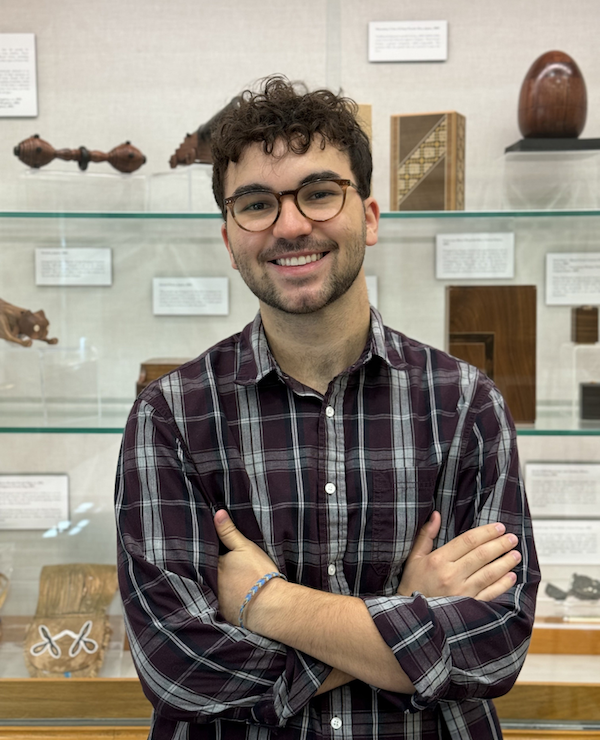
Matthew Hayden
Matthew Hayden is PhD student in the department of Linguistics advised by Professor Thomas Graf. Working in mathematical linguistics, Matthew’s main research interest is the complexity of natural language, especially with respect to syntax and morphology. His current work involves the development of computer programs to assess the complexity of morphological processes, and the formal study of functions that closely conform to the complexity of transformations observed in syntax.
Before coming to Stony Brook, Matthew graduated from Indiana University in 2024 with degrees in Enigmatology and Mathematics. He loves learning and teaching about topics at the intersection of linguistics, computer science and mathematics.
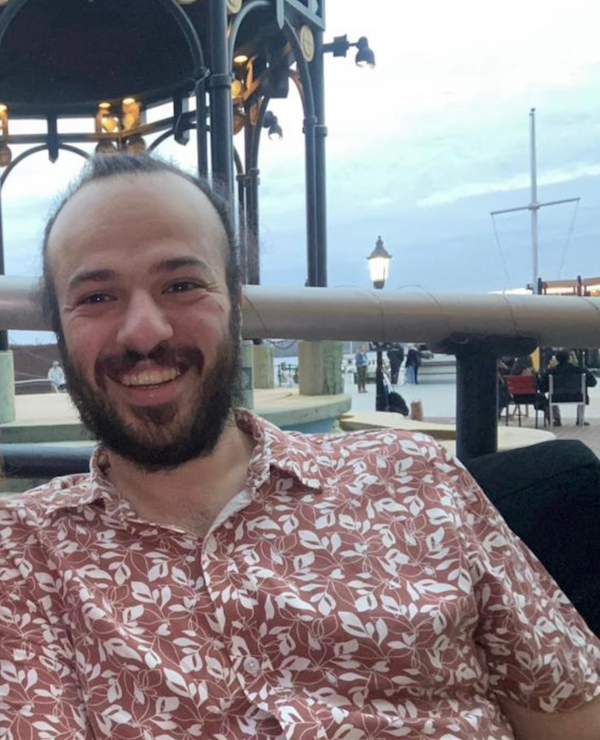
Abed Qaddoumi
Abed Qaddoumi is a PhD student in the Department of Linguistics at Stony Brook University, affiliated with the Institute for Advanced Computational Science. His research spans computational phonology, grammatical inference, formal-language theory, and neural networks, with a focus on stress assignment and syllable structure in Arabic dialects. He has built theory-driven resources and tools, such as the Arabic stress dataset with Professor Owen Rambow, Jordan Kodner, and Jeffrey Heinz, and a pipeline that generates the phonotactics, finite-state machines, and formal-language complexity class for input data.
Before Stony Brook, Abed earned an MS in Computer Science at New York University and a BS in Electrical Engineering from the University of Jordan. He collaborates and participates in cross-disciplinary reading groups in linguistics and computer science.
Ready To Take the Next Step?
Join us for SBU Pre-College Summer!